
East Orange, MT · Essex County
Annual Post-Tax Year Income Statement for Senior and Disabled Property Tax Deduction
This annual income statement lets qualified senior citizens, disabled people, and surviving spouses or civil union partners confirm eligibility to continue a dwelling-house property tax deduction.
What this form is
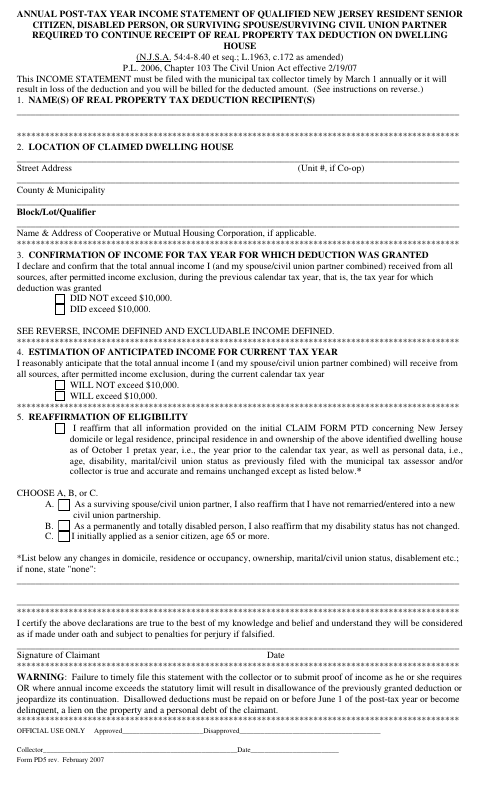
Recipients of the dwelling-house property tax deduction use this statement to confirm their income for the previous tax year, estimate current-year income, and reaffirm that eligibility information remains accurate. The form says it must be filed with the municipal tax collector by March 1 annually; it warns that late filing or failure to meet eligibility requirements may result in disallowance. It asks for claimant and property details, income confirmations, and any changes to eligibility information.
Who needs it
A recipient of the dwelling-house property tax deduction who is a qualified senior citizen, disabled person, or surviving spouse or civil union partner must file this statement annually.
How to submit it
File the statement with the municipal tax collector on or before March 1. The collector may require proof of income or other information needed to establish eligibility.
About notarization
This statement is signed without a notary; it certifies declarations as if made under oath, and no separate sworn attachment is identified.
How to submit this form
- 1
Download The Statement
Download the annual post-tax year income statement PDF.
- 2
Complete The Form
Enter claimant and dwelling-house details, confirm prior-year and anticipated income, and reaffirm eligibility or list changes.
- 3
Gather Supporting Information
Provide proof of income or other information if the municipal tax collector requires it.
- 4
Submit To The Tax Collector
File the completed statement with the municipal tax collector on or before March 1.
Frequently asked questions
- Who files the annual income statement?
- Recipients of the dwelling-house property tax deduction who are qualified senior citizens, disabled people, or surviving spouses or civil union partners file it annually.
- When is the statement due?
- The form says to file it with the municipal tax collector on or before March 1 annually. It warns that late filing may result in disallowance of the deduction.
- Do I need a notary for this income statement?
- No. The statement is signed without a notary, though its declarations are considered as if made under oath. No separate sworn attachment is identified.
- How do I submit the statement?
- File it with the municipal tax collector by March 1. The collector may require proof of income or other information to establish eligibility.
Need something notarized?
This Annual Post-Tax Year Income Statement for Senior and Disabled Property Tax Deduction doesn’t need a notary — but if you have another East Orange form that does, a commissioned online notary can help.